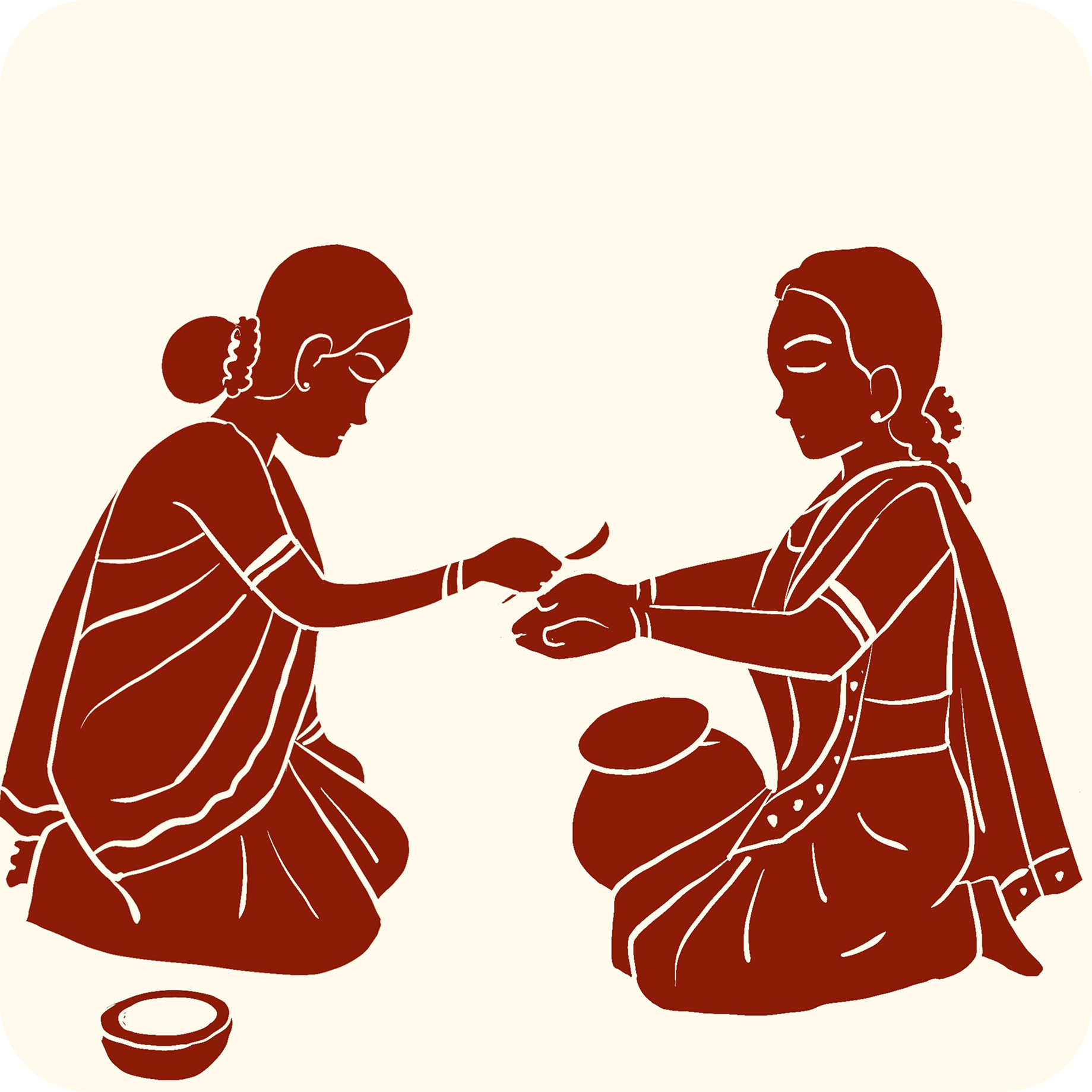
Welcome to the women's room, where you'll discover a special knife that tells the story of Tulu women's strength and responsibility.
This is the "Gejje Kathi" — a knife carried by Tulu women.It was a symbol of a woman's role in protecting her family and managing her household.
Different Knives for Different Families
Just like the baby food grinders, the Gejje Kathi came in different versions:
But regardless of how fancy it was, every knife carried the same meaning: responsibility.
Ceremonial Uses
A woman receives her first Gejje Kathi during a special ceremony when she attains puberty. She is made to sit on a platform made of 4 coconuts and given a bath. Then she is given the knife. After this, she holds the knife during important ceremonies like her wedding or the birth of her child — meaning she is now fully responsible for her household and her child's safety. At times Gejje Kathi was also used for self defence
From birth to death, Tulu women carried this knife as a sign of their strength. It showed that women in Tulu culture were protectors, decision-makers, and powerful members of society!